Post
19 Oct 2026
How Anthropic's Claude Code team reviews AI code
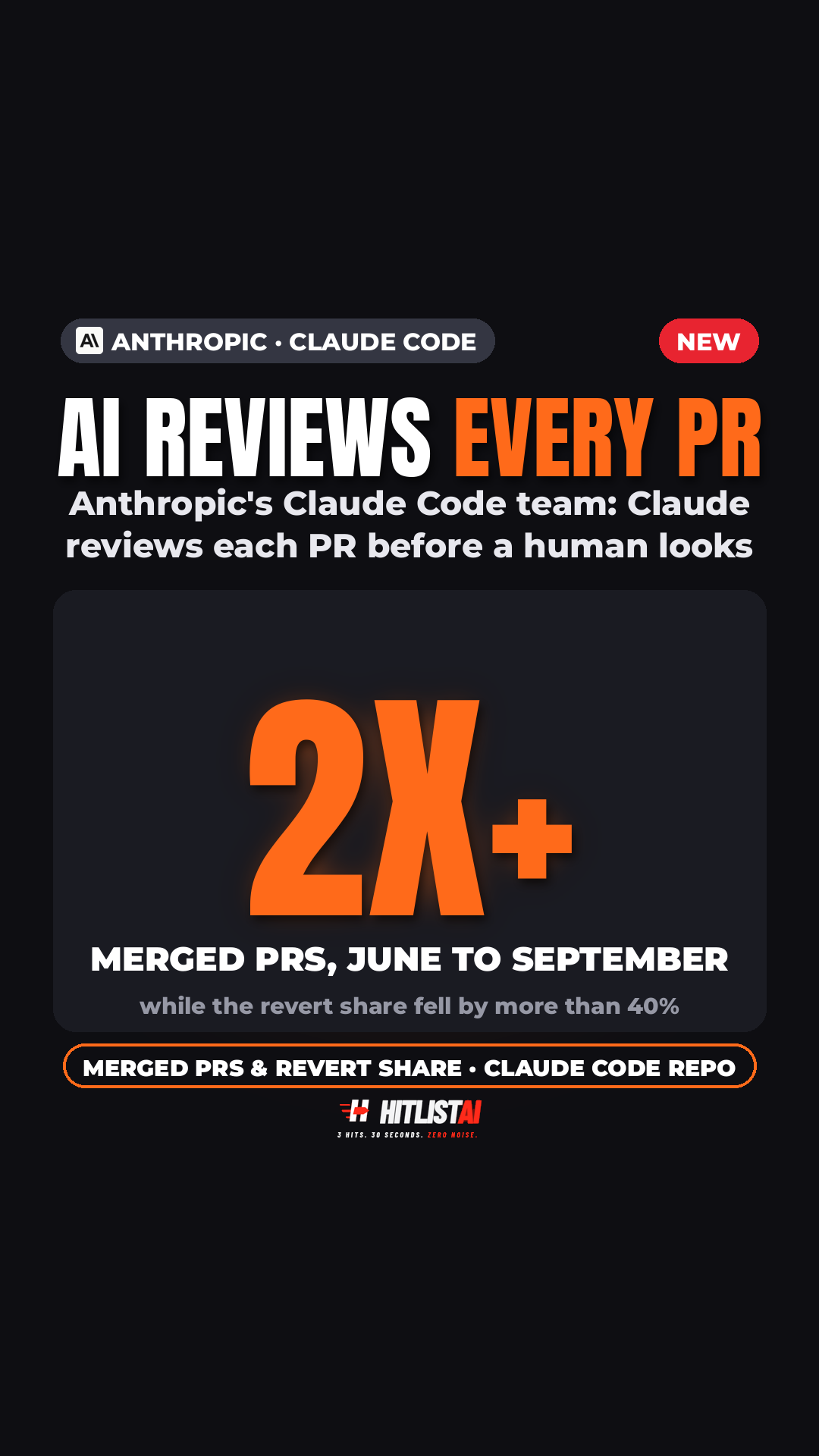
In Anthropic's monorepo daily landed changes went from ~2,500 (May) to 30,000+ (Sept). The Claude Code team has Claude review every PR before a human, scales human approval by risk (0/1/2 people, classifier-set, agent approvals never count), and reports merged PRs more than doubled Jun->Sep while the revert share fell 40%+. A concrete template for review when agents write the code.
 02Research
Stanford's NCM writes text coarse to fine
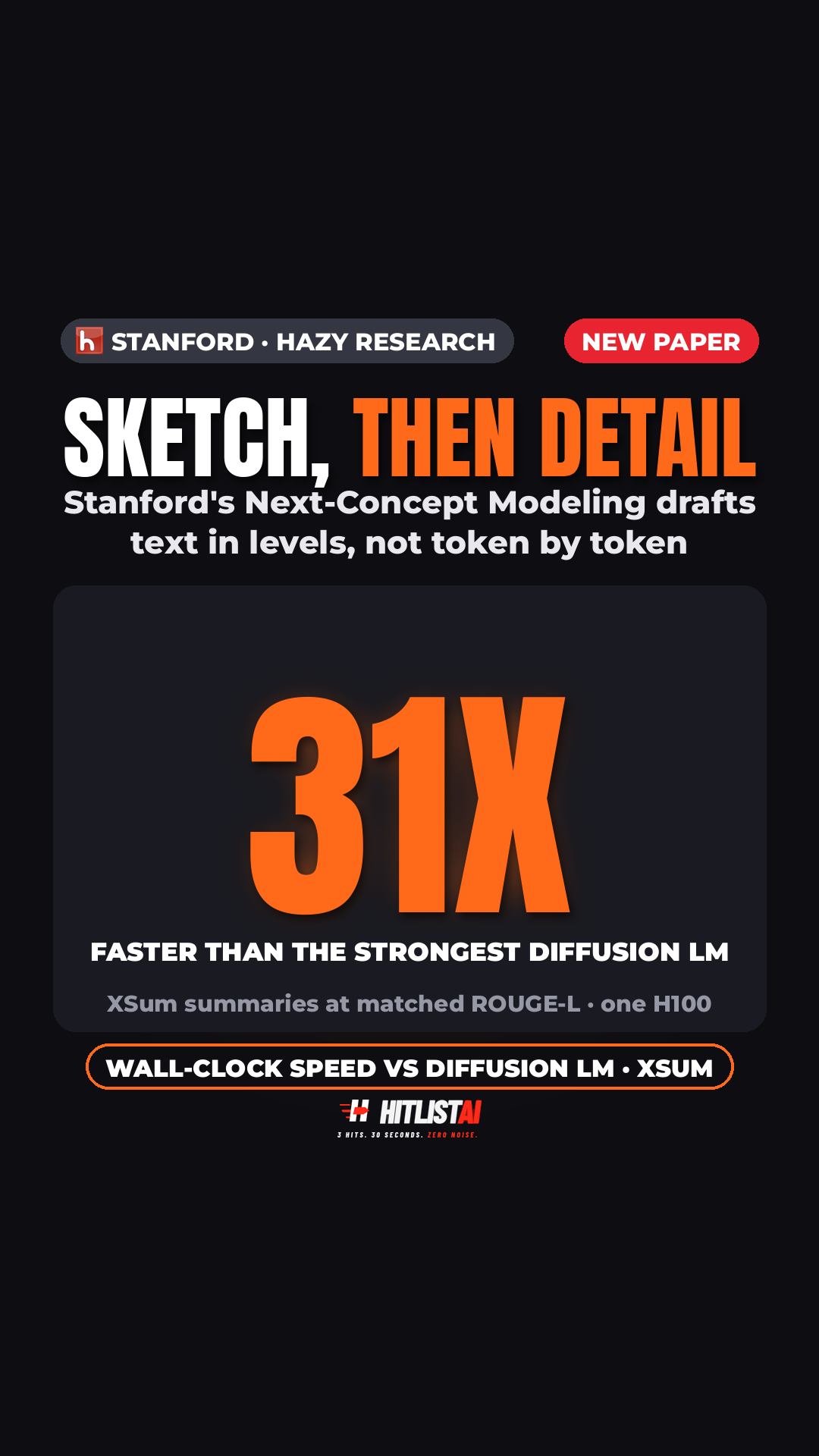
Instead of one token at a time, Stanford Hazy Research's Next-Concept Modeling generates a hierarchy of codes level by level, predicting every code in a level in parallel. Against the strongest diffusion LMs at matched size on one H100: 21x faster on LM1B with better quality, 10x on OpenWebText at comparable quality, and the same ROUGE-L on XSum at 31x faster; 86.1% vs 81.3% on hard Sudoku; about 4-5x fewer training tokens. Early research: ~100M-parameter models, scaling tested to 725M.
Stanford Hazy Research · arxiv.org ↗ (opens in a new tab)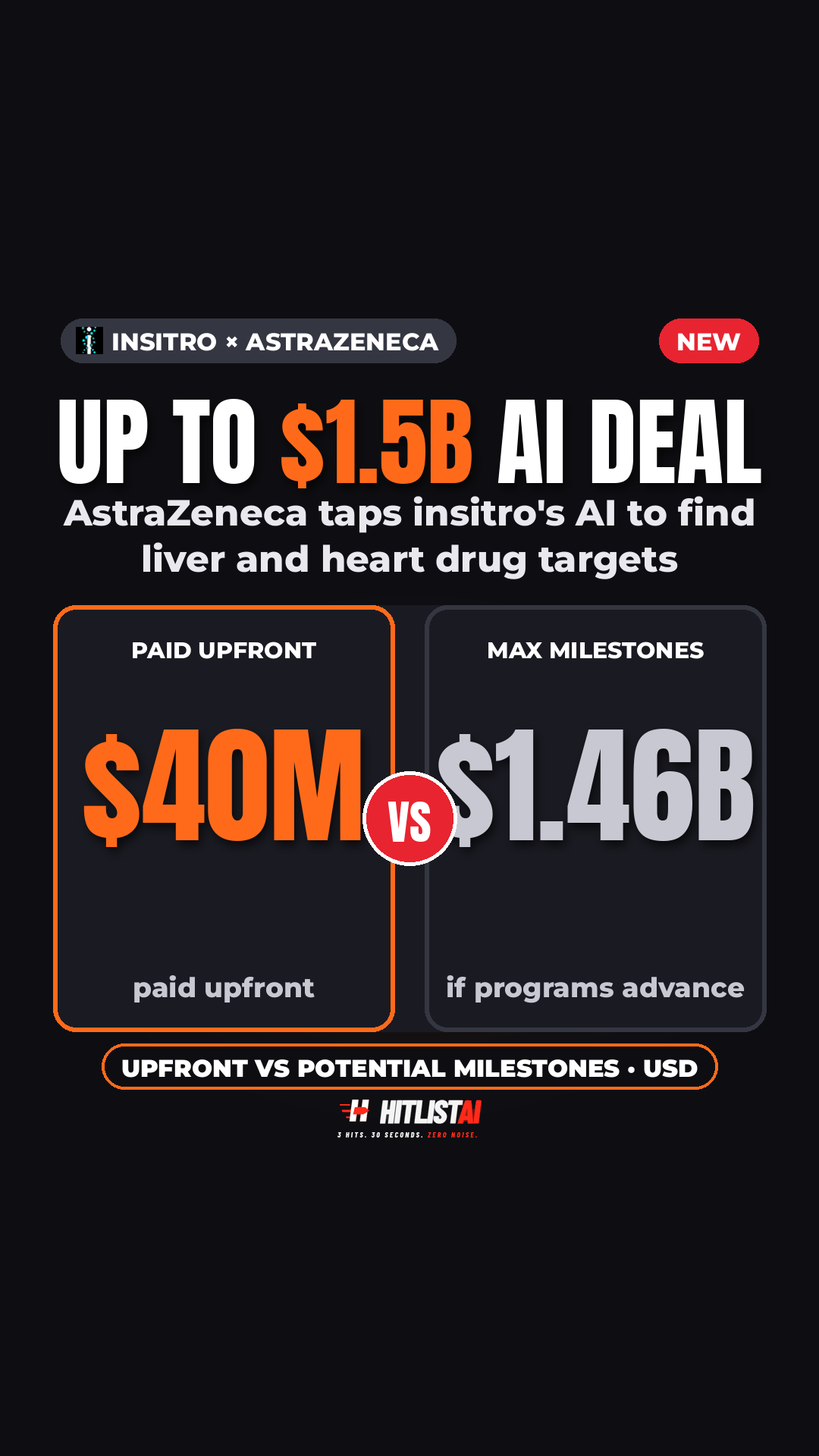 03Business
AstraZeneca's AI drug discovery deal with insitro
AstraZeneca pays insitro $40M upfront, with up to ~$1.46B in potential milestones plus single-digit royalties, to apply insitro's Virtual Human AI platform to MASH (a metabolic liver disease) and cardiomyopathies, where one diagnosis spans patients with different underlying biology. insitro takes AstraZeneca-nominated targets to development candidate; AstraZeneca leads trials and commercialization with exclusive worldwide rights to selected programs. Fine print: under 3% of the ~$1.5B headline is upfront, and the work starts at target discovery.
AstraZeneca · astrazeneca.com ↗ (opens in a new tab)